Newsletter Subscribe
Enter your email address below and subscribe to our newsletter
Enter your email address below and subscribe to our newsletter

 ByJohn A
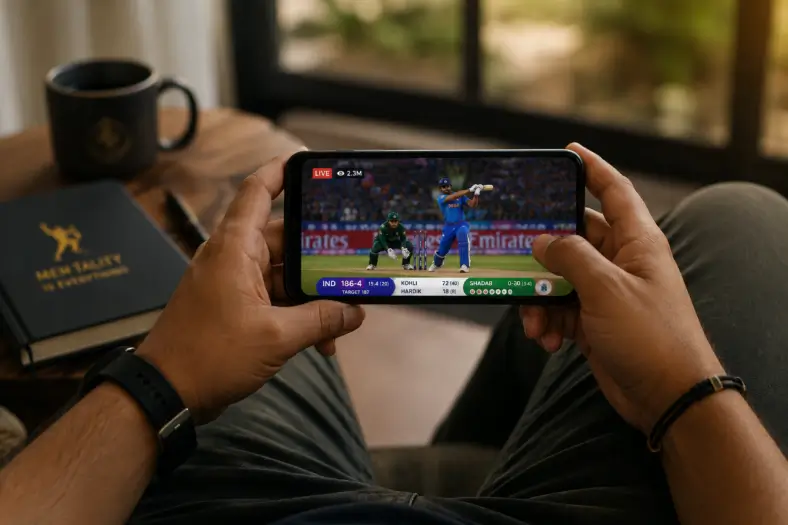
Cricket used to ask for patience in a very simple way: sit near a television, listen to radio commentary, or wait for the result. That habit has changed. A fan can now leave the match for ten minutes, open a phone, and know almost instantly whether the innings is steady, slipping, or starting to turn. This has changed online sports reading. The final report still matters, but live match access has become the place where many fans first understand the game. Scores, overs, wickets, batters, bowlers, and recent movement now shape the way cricket is followed while the match is still alive.
A cricket match can change during a short break. One over can move the chase from calm to awkward. One wicket can expose a weaker middle order. One bowling change can slow a scoring rate that looked safe a few minutes earlier. Online cricket pages help because they let the fan return without needing the full story from the toss.
That is why many fans connect online sports habits with desi online cricket betting in india when they want live cricket movement, score updates, and match details gathered in one place. The appeal is practical. A focused page can show the state of the game without sending the reader through scorecards, short comments, and general sports pages just to catch up.
Most fans do not follow every delivery. They check the match during a commute, between work tasks, after a message, or while another game is also on. That changes what a cricket page has to do. Long commentary may be too much for a quick check. A plain total may be too thin. The page has to meet the reader somewhere between both.
Good online coverage gives the match back fast. The score should be clear. Overs and wickets should sit close to it. The active batters and current bowler should not be hidden. In a chase, the required rate needs to be visible. In a first innings, wickets in hand and recent scoring matter more. Cricket is easier to rejoin when the basic state is easy to read in one glance.
The best digital cricket pages are not always the fullest ones. A crowded page can slow the reader down. During live play, order matters more than volume. A fan opening the match halfway through the innings needs the current state first, then the details around it.
These details help the reader avoid guessing. A score of 118 for 3 can mean control if two settled batters are in and the pitch is flat. The same score can feel weaker if a new batter has arrived and the surface is slowing. A good page helps the reader see that difference quickly.
Cricket has always been full of numbers. What changed is when fans can use them. Strike rates, bowling economy, partnerships, run rate, and required rate are no longer saved for the post-match table. They are part of the match while the innings is being built.
This makes online cricket more active. A fan can compare the current rate with the target. Another can see whether a bowler still has overs left. Someone else can check if a partnership is repairing the innings or only delaying a collapse. The game becomes easier to read because the numbers move with the action.
Still, numbers need setting. A strike rate of 120 can be weak in a T20 chase on a flat pitch. It can be useful on a slow surface where nobody is timing the ball. A bowler giving seven an over can be expensive in one match and valuable in another. Format, ground, weather, and match phase decide how the number should be read.
Online sports readers have less patience for slow pages and buried information. If a cricket page hides the score, loads poorly on mobile, or mixes the match with unrelated updates, it quickly loses value. Fans want direct access to the game, clear navigation, and enough detail to understand pressure without opening several sources.
This matters even more on busy cricket days. Several fixtures can overlap. One match may be near the toss, another in the middle overs, and another heading into the final stretch. A strong digital setup lets fans move between games without waiting for long recaps. The phone becomes a small match center, useful for quick checks and fast returns.
The better technology does not make cricket heavier. It makes the match easier to enter. It keeps the live score, current players, match status, and fixtures close together. That is what helps fans who care about the game but cannot watch every over.
Live cricket access is useful because it reduces the distance between the fan and the game. A person can step away, come back, and still understand what has shifted. The score gives the surface. Recent overs, player roles, wickets, and conditions explain the pressure underneath it.
Fast updates still need careful reading. A dropped catch, a review, a no-ball, rain, or one tired bowler can change the next few minutes. Online cricket coverage works best when it helps fans ask better questions instead of treating every update as final. Who is batting? Which bowlers remain? Is the required rate rising because of real pressure or one quiet over? When live data is clear and match context sits beside it, cricket becomes easier to follow before the result arrives.